Hope is the Nearness of God
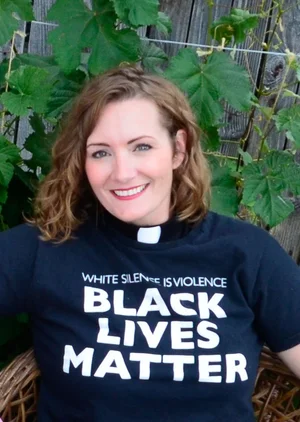
This December, members of the Juniper Formation Leadership Team are sharing daily reflections through the Daily Ripple app and Substack. Join us as we explore the Advent themes of hope, peace, love, joy, and Christmas. This week’s reflections are written by Rev. Dr. Jenny Whitcher, Juniper Formation’s Minister of Prophetic Formation.
Hope is Birthed Out of Chaos
Genesis 1:1-2, The Inclusive Bible -
In the beginning
God created
the heavens
and the earth.
But the earth became chaos and emptiness, and darkness came over the face of the Deep—yet the Spirit of God was brooding over the surface of the waters.
In the beginning of God’s creating, ruach Elohim, the feminine Spirit of God hovered over the waters, brooding. Maybe Spirit wasn’t embittered, but like a brooding hen with meditative readiness. A fierce devotion to birth and raise new life.
During pregnancy, the amniotic sac—the waters, surrounds the fetus. Dark, warmth, protecting the fetus from harm, regulating its body temperature. The waters are where new life grows until it is ready to live outside of the waters.
During birth the waters break, and the chaos of new life emerges breathing air for the first time, cry-screaming or silently writhing at the abrupt change from watery warmth to cool air, breathing on its own for the first time. From one to two (or more). A transformation of hope that for weeks, months, and years feels chaotic at times for all involved.
A gender-expansive feminization of the traditional masculine translations of these first words of the Bible transforms chaos, ruination, and depression into our Creator’s greatest hope.
If God is “the Deep”—the womb and also the Spirit surrounding the womb? Where in your faith, your life, your community’s life, your country’s life is God troubling the waters to give birth to new life—to hope. How might you midwife in the chaos?
Hope Lives in the Twilight with Hopelessness
Genesis 1:1-2, The Inclusive Bible -
Then God said, “Light: Be!” and light was. God saw that light was good, and God separated light from darkness. God called the light “Day” and the darkness “Night.” Evening came, and morning followed—the first day.
Even my personal experience of seeing God show up in ways beyond my imagination does not overcome my desperation at the cruelty of this world.
Biblically I’m not alone in struggling with hope—trusting and expecting God, or good, justice, and peace.
God created this cycle of night and day, circadian rhythms that regulate all life. Maybe too, there is a natural cycle of hope and hopelessness.
There is faith in God and there is the reality of this world. We live in the twilight of hope and hopelessness, holding both. We believe change is possible, and also, too many continue to suffer.
James Baldwin highlighted an old spiritual in his book The Fire Next Time:
God gave Noah the rainbow sign,
no more water the fire next time
If we don’t change our addiction to slavery, our cruelty and hatred, then, the fire next time.
And yet we hope, “The impossible is the least that one can demand.” - James Baldwin
With the deep waters of the dark and the fire of the sun, night and day, flood and fire are all renewing cycles that we hope will lead us to liberation. How are you living in the twilight between the two? What impossibility are you working towards?
Hope is Liberation
Romans 8:22-23, The Inclusive Bible -
We know that from the beginning until now, all of creation has been groaning in one great act of giving birth. And not only creation, but all of us who possess the firstfruits of the Spirit—we too groan inwardly as we wait for our bodies to be set free.
Let’s ground our reflection on a rewrite of Genesis 1:1-2 from the beginning of the week:
But the earth became a womb, and darkness came over the face of the Deep—yet the Spirit of God was meditating over the surface of the waters, giving birth to new life—to hope.
God’s creating begins with birth, and from then until now is one great, ongoing birth. The labor pains of which elicit groans even from those who experience the indwelling of the Holy Spirit—the firstfruits, even they are not free.
Earlier in verse 21, it reads, “creation itself would be freed from its slavery to corruption.”
God’s hope is that we would be free from being enslaved to corruption. That we would not worship power and wealth, but rather righteousness, truth, love, kindness. Likewise, God’s hope is that we would not enslave others for wealth and power.
It is also our hope that we would both seek liberation for ourselves and for everyone else.
In what ways are you practicing liberation for yourself and for others? In what ways are you feeling enslaved to the corruption of power and wealth? What choices can you make to shift towards liberation?
Hope is action
Matthew 24:38-42, The Inclusive Bible -
In the days before the flood, people were eating and drinking, having relationships and getting married, right up to the day Noah entered the ark. They were totally unconcerned until the flood came and destroyed them. So it will be at the coming of the Promised One. Two people will be out in the field; one will be taken and one will be left. Two people will be grinding meal; one will be taken and one will be left. Therefore be vigilant!
When I read these verses I picture the 2025 ICE abductions on the fertile Western Slope and the 2006 raid on a meat-packing plant in Greeley, Colorado. 20 years of fear. Fear of violence, abduction, families torn apart, financial ruin, death.
We are living in apocalyptic times, where worlds are being destroyed. Where our neighbors are abducted with supremacist cruelty.
In response, we are called to witness faithfully: to lead with hope, to seek justice and peace, to love, and to be joyful. It is through our faithful words and actions that God’s love comes, this is what is promised to us.
Be vigilant, because it is too easy to be comfortable, to live our everyday lives, distracted, ambivalent, numb, selfish to the suffering of our neighbors and even ourselves. Unwilling to sacrifice.
Hope is not waiting for a glittering God to rain down. Hope is trusting that God is within and with us as we speak out, as we take action, as we are the becoming of God’s love for all of creation.
When you consider hope as active—your words and actions, and not passive awaiting, what shifts for you theologically? What changes in how you imagine is possible with collective action?
Hope is the Nearness of God
Matthew 24:32-33 -
“Take a lesson from the fig tree. When its branches are tender and its leaves sprout, you know that summer is near. 33 In the same manner, when you see all these things, know that the Promised One is near, at the very door.
The fig tree is a symbol of fertility, flourishing, and peace. It’s tender branches and sprouting leaves leading into sweet summer fruits. This is when we know that God is near.
However, Matthew then goes on to warn of God being near as: before the flood of Noah’s time, people being taken from one another in the field—to where?, and preparing your house for a thief. These images don’t fit together well.
Maybe Matthew wasn’t familiar with “gentle parenting,” instead he elicits generational trauma stories to scare people into faithfulness. Like parents who threaten that God or Santa is watching to keep their kids’ behavior in check.
For all the messiness of Matthew’s efforts, perhaps two things are true: 1) God is near when we are growing and flourishing, and also, 2) God is near when horrible things happen, but not because God causes them.
Hope is the nearness of God’s love, even when God couldn’t feel further away.
There are lots of reasons to feel that God is far away right now. How might you invite God to be closer this Advent season? What practices would draw you closer to God?
New Wearables Available in Our Shop