Returning to Each Other
For Lenten Season, members of the Juniper Formation Leadership Team and community have been sharing daily reflections through the Daily Ripple app and Substack. This week’s reflections are written by Rev. Candace Woods.
earth creature dust-ness
Genesis 2:7
“So YHWH fashioned an earth creature out of the clay of the earth, and blew into its nostrils the breath of life. And the earth creature became a living being.”
We are earth creatures. I so appreciate the way that the Inclusive Bible translates this text. It helps me to reorient to my own humanity - a humanity that is vitally in relationship with other earth creatures and reliant upon the mutual connection with the earth.
It makes me curious about how the writers of this ancient creation story understood their relationship to the land and its flora and fauna. How they oriented to the stars and planets. How they may have known more intuitively than we do now how intricately tied we as humans are to the rhythms and cycles of the earth and that God’s goodness was and is present in that relationship.
As this season of Lent begins and we enter into a more intentional relationship with our dust-ness, I hope to spend more time reflecting on the truth that I am of this earth and created to be in right and reciprocal relationship with it. There is goodness in being an earth creature.
How might you embrace your earth creature-ness in your day today? What perspective might you gain if you orient yourself to the earth with that reciprocity in mind?
a survivor’s refusal
Psalm 51
A psalm of David
Written when the prophet Nathan came to him after David had relations with Bathsheba
verse 4: I sinned against you alone.
CONTENT NOTE: sexual violence
As a survivor of sexual violence, I reject David’s psalm of repentance. David clearly failed to acknowledge that his actions had harmed anyone. This man used his power and privilege as King to violate Bathsheba’s ability to give consent and then arranged for her husband to be killed in battle so that David would not have to face accountability. Only when the prophet Nathan came to confront him does he performatively weep and wail in repentance to God. He does not see that he has sinned against Bathsheba or Uriah. He does not name that he has harmed them. He is only concerned about his status with God.
In an age where wealthy, powerful men are being protected from accountability and systems of violence against women and children and queer folks are left unchecked, those of us in Christian traditions must reckon with the ways in which our stories of faith have been used to allow the powerful to repent only to God and then not face accountability from those they have harmed.
David’s ability to stay in power in Israel after this violation of trust says less about God’s mercy and more about the way power protects itself from justice. May we do better than our ancestors and tear down every system of violence that power has erected.
What stories or ideas from your faith tradition have been used to protect the powerful from accountability instead of protecting the vulnerable? What action is in your power today to challenge those systems of violence?

the trees of life
Revelation 22:2
On either side of the river grew the trees of life which produce fruit twelve times a year, once each month; their leaves serve as medicine to heal the nations.
One of my Covid lockdown era projects was an herbal foraging and medicine-making course. As a white person whose ancestral foodways and medicinal practices have been stolen from me in service of the project of whiteness, I have been working to reclaim my connection to these histories and build healthy practices with the land that I am now in relationship with, land that my ancestors stole from its indigenous inhabitants.
The Biblical narrative begins and ends in gardens. There are trees that bring life and that bring healing to nations. What if we in the Christian tradition saw these not simply as metaphors, but as realities into which we are called to live? What if trees and forests really do bring healing? What if practices of tending and stewardship and gardening were seen as spiritual goods that repair our relationships with the earth?
As I have deepened my relationship with the plants and trees of my context, I have felt a healing occur. The separation of my identity from my place is beginning to shift. I have a greater sense of home. And I am more able to grieve that which has been lost through colonial and supremacist projects.
What is your connection to the land on which you reside? How might that connection shift if you learn from the plants and allow them to help heal you?
change your mind
Matthew 3:1-2
At this time John the Baptizer appeared in the desert of Judea, proclaiming, “Change your hearts and minds, for the reign of heaven is about to break in upon you!”
As I read these words from John the Baptist, in my mind are the viral videos of the Singing Resistance in Minneapolis serenading ICE agents with, “It’s okay to change your mind / Show us your courage / Leave this behind / It’s okay to change your mind / And you can join us / Join us here anytime.”
What an act of compassion and care: to be looking out for the moral and ethical well-being of those perpetrating violence while protecting and caring for those being harmed. The ability to change our hearts and minds and do something different than what we have been doing is a profound gift of being human. We are called to change and grow into disciples of Christ and to call others into acting in ways that are kind and just.
The in-breaking of the kin-dom of heaven is calling all of us to be in right relationship to one another. Yes, that means you too, federal agents who are causing harm. May you turn from your violent ways, change your minds, and join us in building a new world.
What might you be called to change your mind about as a result of the kin-dom of heaven being at hand?
lamenting sin
Revelation 22:17
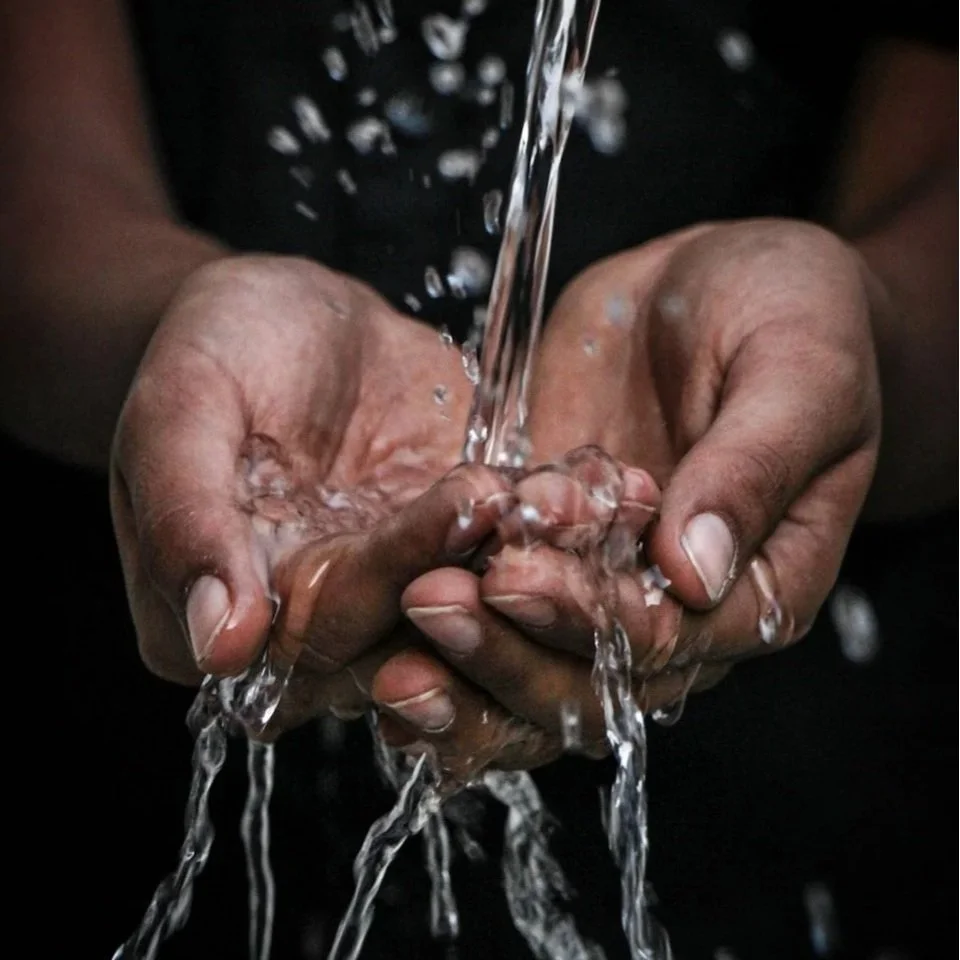
Let the thirsty come forward. Let all who desire it accept the gift of life-giving water.
In the midst of all the other horrors that have been persisting in recent weeks, I’ve been grieving the news from the UN that we have now entered a state of global water bankruptcy. How truly devastating.
In the vision of the kin-dom of God being made complete that is prophesied in Revelation, there is a river that flows with crystal clear water through the streets of the city of God. And there is an invitation to come and partake for all who are thirsty. I wonder what a theology and Christian praxis that centered the rights of every person to clean water would feel like in this moment?
As I take this time in Lent to grieve and mourn and lament the sin of human decisions that have led to this preventable tragedy, I also want to orient myself to the truth that things do not always have to be this way. That repentance and change and shift are also possible.
What are you grieving today? What truth is emerging as you allow yourself to lament?