Who do you love?
For Lenten Season, members of the Juniper Formation Leadership Team and community have been sharing daily reflections through the Daily Ripple app and Substack. This week’s reflections are written by Amanda Creek (she/her).
Covenant
Genesis 31:44
Come now, we will make a covenant, you and I, and may it be a witness between us.
Growing up, I remember a quiet sort of covenant exchanged between folks existing and communing together. A non-written agreement that this is the way we do things. An understanding that we take care of one another simply because we’re in this life together. From the small group of teens who stood around a cement pole together at school before the bell rang, to the people I made art and tried to understand it with, to the people who were family, chosen and beyond.
As a collective existing on this spinning planet, it should be the same, even with each of our differences. The earth belongs to us all. We are neighbors and family and the covenant should be between us all.
To love one another, to help one another, to protect our home together.
What do we owe each other by being human together? And where is the human covenant being broken in the world around you? How can we work together to repair it?

Who are My Kin?
Matthew 12:47-48
Someone said to Jesus, “Your mother and kin are standing outside, and they are anxious to speak with you.” Jesus replied, “Who is my mother? Who are my kin?”
I don’t picture Jesus here as being cruel or dismissive to his family. He had this deep spiritual attunement to what was important in the moment, to who needed him, his gifts, his attention, his embodiment. This is an acknowledgment of those people. This is a commitment to them. It’s a choice. They, too, are my kin.
Swap this moment out for what’s vying for our collective attention in the here and now. What are the distractions? And what or who needs us, our gifts, our bodies.
Who are our kin? Who needs us to choose them in this moment? Can we be present and provide our full attention? Can we practice the same radical availability that Jesus gave?
Who really needs you to show up for them right now? Are you tuning into what they need and how you can show up or are you distracted by other things in life?
Hold the Vision
Psalm 144:13-14
Then our barns will be full,
With every kind of provision;
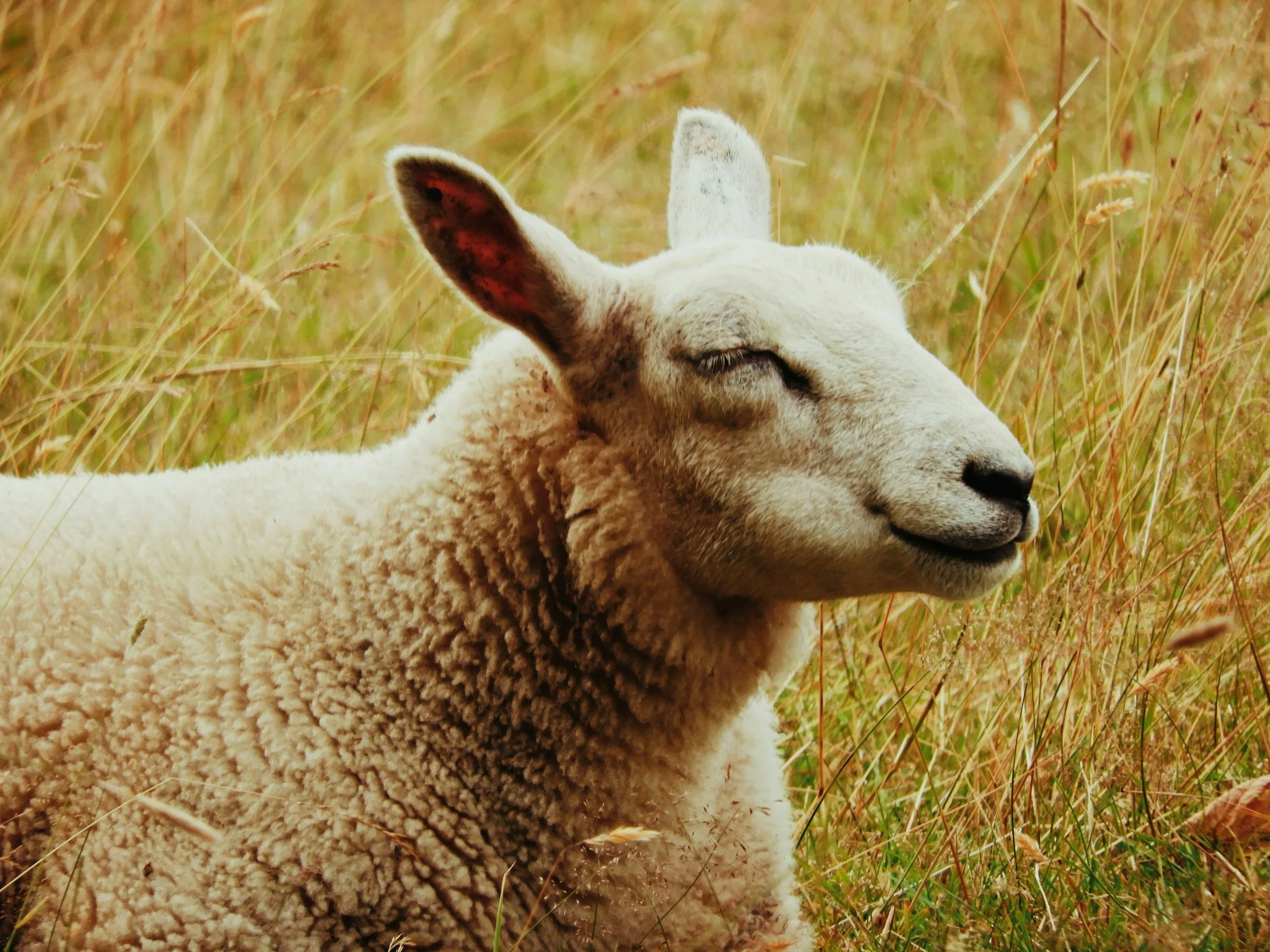
Our sheep will be in the thousands,
And the tens of thousands in our fields.
Our chieftains will be firmly established;
There will be no exile, no cry of distress in the streets.
A world with no exile and where there are no cries of distress in the street… It is a vision that feels far away from our current reality. But do we lose the vision for that world when everything points toward the fact that things are going in the opposite direction?
Do we lose hope?
The answer, I think, is no. There is a case for hope here. For holding the vision closer.
Close to our hearts, which moves us toward it. Our actions, whether small or large, on a local scale or beyond, they let that hope ripple outward. It’s all forward movement when hope is coupled with action.
Declaring it’s impossible, though, that’s what causes us to stop. That’s what lets injustice continue.
The psalmist didn’t dream small. Full barns. Thousands in the fields. No one in exile.
Let’s hold the vision.
What would it mean for you personally to refuse to stop, to keep moving toward a world without exile even when it feels impossible? What does that mean in action?
Spirit of God
1 John 4:13
The way we know that we remain in God and God in us is that we have been given the Spirit.
God’s Spirit confirms the covenant we have with one another, creates kinship between each of us, and sustains the vision of a just future. We, together, have been given a share of that Spirit. They hold us all together.
And the vastness of God and the Spirit means to me that there is vastness in our capacity as a whole to fight injustice. There is vastness in our creativity to problem solve, in our ability to hold the weight of heavy things together, in our ability to dream new things.
We collectively inherit an infinite universe of the Spirit’s capacity. And collectively together, we can wield it.
Where have you experienced the collective capacity of community to do something none of you could have done alone? What would it look like for you to actively wield your share of the Spirit’s capacity this week? How will that help your community?
Who do you love?
1 John 4:19-20
We love because God first loved us. If you say you love God but hate your sister or brother, you are a liar. For you cannot love God, who you have not seen, if you hate your neighbor, who you have seen.
Every verse this week has focused in some way on the collective. Then we land on this verse here.
If you say you love God but you don’t love your fellow humans, your covenant-sharing kin, you are…a liar.
Ouch.
I don’t know one person who likes being called a liar. Because your word is everything, right? And if you say you love God but don’t love your neighbor, you’re at odds with your own words.
But despite the word ‘liar’ being harsh, you can’t uphold a covenant, share a kinship, hold the shared vision, or be connected by God’s Spirit if you refuse to love God’s family.
Which brings us right back to Jesus’s earlier words, “Who is my mother? Who are my kin?”
Who would Jesus say in 2026?
What would it look like this week to make your love visible and concrete to someone who needs to feel it?