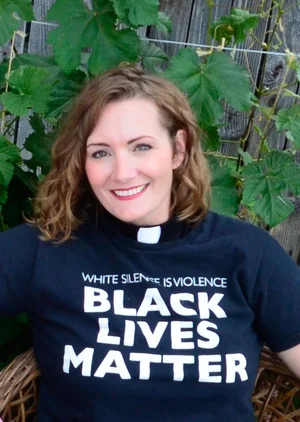
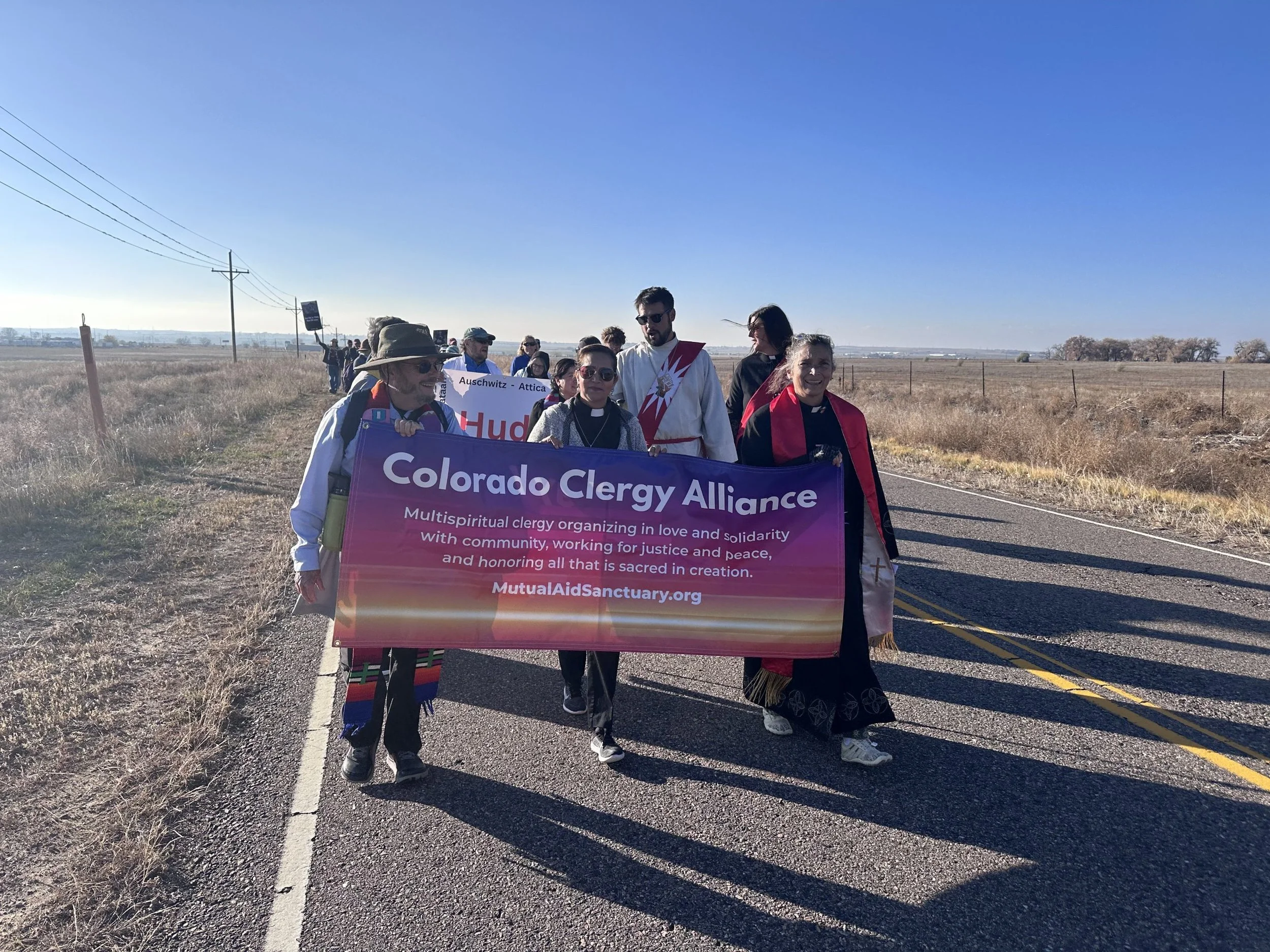
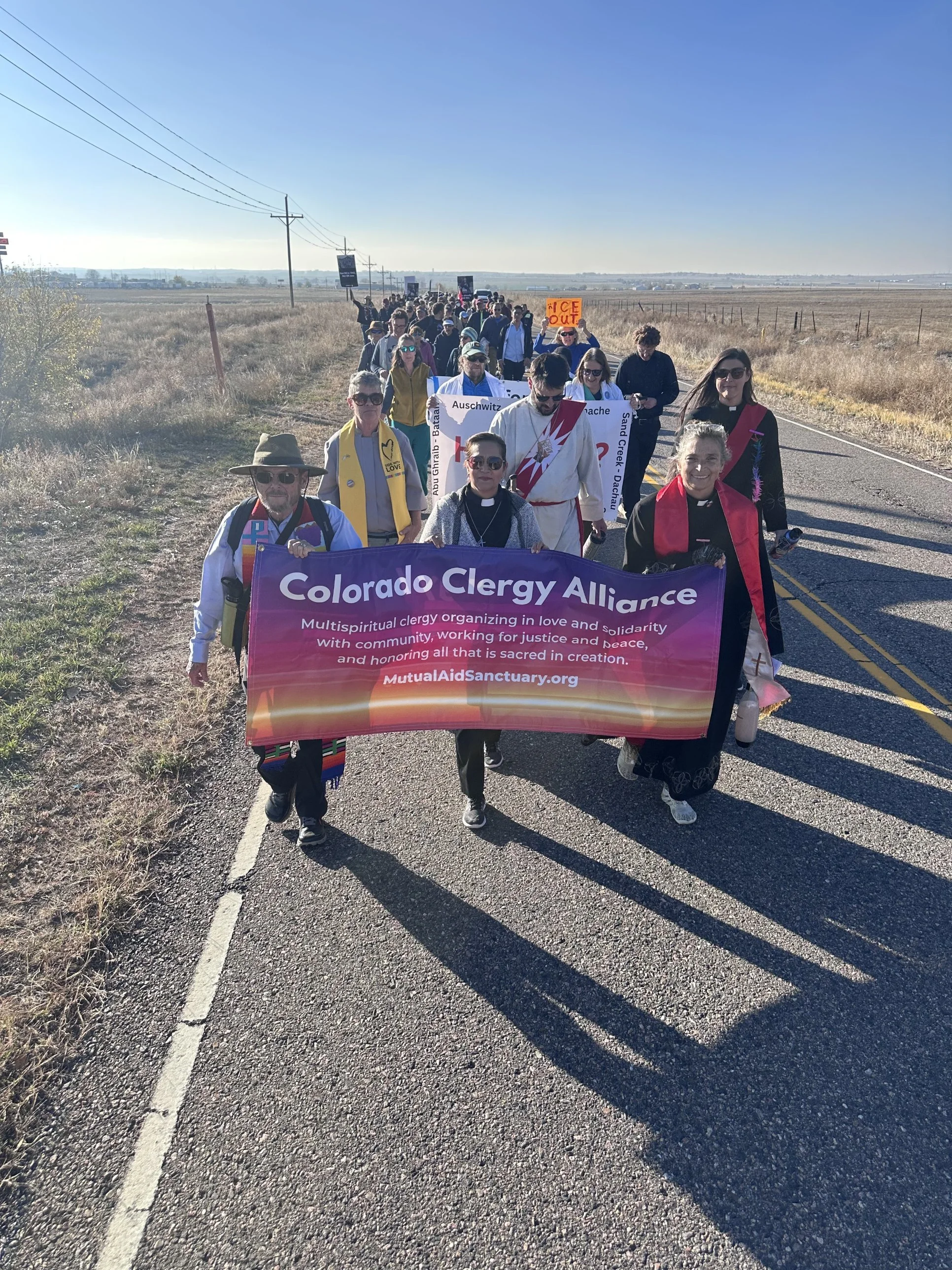
This is the message Rev. Dr. Jenny Whitcher, Minister of Prophetic Formation at Juniper Formation UCC shared at the Hudson Solidarity Walk Sunset Interfaith Service on November, 15, 2026, outside of the Hudson Correctional Facility, located at 3001 Juniper St, in Hudson, CO. The Colorado Clergy Alliance (a community cocreated and co-led ministry of Juniper Formation UCC), Tsuru for Solidarity, Interfaith Immigration Network, American Friends Service Committee, and Shut Down Geo partnered together to lead the procession and service in solidarity with immigrants and the town of Hudson, in memory of the 45 people who have died at the hands of DHS/ICE in 2026 so far, and against the proposed Hudson ICE detention facility.
The former Hudson Correctional Facility is slated to become a 1,200-bed immigration detention center, almost doubling ICE’s detention capacity in Colorado—increasing the current 1,500 capacity at the Aurora ICE Detention Facility to 2,700 statewide. U.S. Immigration and Customs Enforcement (ICE) and the GEO Group have signed a five-year contract that is valued at $528.6 million. However, the project is currently stalled by federal lawsuits filed by Colorado Attorney General and incumbent Colorado Governor Phil Weiser, and a separate lawsuit filed by GreenLatinos and Colorado Immigrant Rights Coalition (CIRC). There is also a zoning lawsuit filed by Hudson residents and Together Colorado. The project faces intense community opposition. We are part of that opposition.
Friends, this building where they plan to cage our neighbors sits on Juniper Street. I don’t believe that’s an accident.
My church, Juniper Formation United Church of Christ takes our name from 1 Kings, chapter 19, where the prophet Elijah encounters God under the juniper, or broom, tree.
Elijah stood against the prophets of Baal, and the queen swore to kill him. He fled into the wilderness, collapsed under a juniper tree, and prayed to die. And there an angel touched him and brought bread baked on hot stones and a jar of water, and said: “Get up and eat, otherwise the journey will be too much for you.”
For Elijah, the juniper tree is a symbol of divine comfort, rest, and renewal in deep hardship.
For the Cheyenne and Arapaho, on whose homelands we gather, juniper has long been used for healing breath, and for blessing and protection.
In Hebrew, Ruach means wind, breath, and spirit all at once. And our scriptures teach us that God breathed humanity into being. The place of the juniper tree breathes sacred life into us. And today we stand together on sacred ground.
What had Elijah been fighting? A transactional worship of wealth that demanded the sacrifice of what was most precious, even children.
We are fighting that same evil today. The worship of wealth eclipses our capacity to love humanity. It abducts people off the street and locks them in concentration camps, because those camps make wealthy people more money. They do not care about the families torn apart, the children without parents, or the violence this brings to our communities.
Renewed under the juniper tree, Elijah walked forty days and forty nights to Mount Horeb. God asked him, “What are you doing here, Eliah?” Elijah poured out his despair: I am the only one left, and they are trying to kill me too.
God replied, “Go, stand on the mountain.” A great wind split the rocks, but God was not in the wind. An earthquake came, but God was not in the earthquake. A fire followed, but God was not in the fire.
And then came a sound of sheer silence—God was in the silence.
God asked again, “What are you doing here, Elijah?” Elijah repeated his complaint. But God does not validate Elijah’s destruction or death. Instead, God sends Elijah back into the world to anoint new leaders, and tells Elijah: You are not alone. There are still seven thousand who have not bowed to Baal.
Tonight, as the sun goes down over Juniper Street, here in Hudson, the question remains: What are we doing here?
We came to find God in the sheer silence, walking, in solidarity with immigrants and the people of Hudson.
We came to bear witness that God is not in destruction and death. God does not arrive with aggression and violence. God arrives gently into the empire to turn everything upside down.
We will not worship wealth and greed. We will not worship white supremacy. We will not worship the sacrificing of our children and neighbors to concentration camps and death.
We will worship the love of our children and neighbors. We will worship justice and peace. We will worship the life and liberation of all people.
Each of us here is an everyday prophet: a fearless truthteller and a lover of humanity. And together we are anointing new leaders with the courage to do what is loving, what is just, and what is merciful for all people.
We are not alone. We are the seven thousand.
As you are able, please raise your hands with me to offer a blessing of protection for this land and this community, and repeat after me:
We declare Juniper Street sacred ground, where God lovingly breathes life into each of us.
Where God does not validate death and destruction. Where we will not worship wealth that sacrifices our precious children.
Amen.