The Prophetic Voice: Two Rants for These Times
This is Part 2 of our weekly blog series in preparation for the 250th anniversary of the signing of the Declaration of Independence. Read part 1, We Tell a Different Story, here.
Before we offer worship resources, we begin where many progressive congregations find themselves: with righteous anger. These two pieces — raw, direct, and theologically grounded — can serve as spoken-word readings, bulletin inserts, or the basis for a sermon series. They name, clearly and without softening, what is actually happening.
They Are Self-Evident — a Rant
This piece takes the Declaration of Independence at its word — and then refuses to let us pretend those words have ever been applied equally. It is a lament dressed as legal argument, a sermon dressed as sarcasm. Consider using it as a call to confession, or as an anchor for a service wrestling with the question: Who is "we the people"?
Spoken Word/Reading, by Rev. Allyson Sawtell
They are self-evident, these truths we hold.
Aren't they?
The "created equal" bit is only if
You are straight
White
Male. No, really, male. None of this gender-thing foolishness.
The "created equal" bit is only if
You have the wealth to prove it
You're not wearing a headscarf
You didn't arrive here in shackles
You're the right gender, otherwise you (and the dog) are property of your
husband.
They are self-evident, these truths we hold.
Are they?
The rights to life, liberty and the pursuit of happiness —
Life, with the uncomfortable bits of history denied because that deep, generational
trauma is so uncomfortable for the comfortable to hear,
and that deep, generational resilience threatens the powerful.
Life, unless you live in Cancer Alley in Louisiana,
or the most polluted zip code in the country in colorful Colorado.
All to feed our addiction to fossil fuels.
Liberty if you have the right papers or skin color.
Happiness as defined by good "god-fearing christians" meaning none of this queer stuff,
or uppity women stuff or anything that reeks of God-given diversity and beauty,
or expansive welcome or even critical thinking!
Loving your country, O you exalted leaders in the halls of power,
does not mean brown-nosing pandering to preposterous supremacist patriotism
that reeks of superiority, control, fear, and power.
Loving your country means growing a spine and standing up and out
against fascist regimes and their dictators,
and maybe enacting, finally, for God's sake, just a few just laws!
They are self-evident, these truths we hold.
They are?
"…whenever any form of government becomes destructive of these ends,
it is the right of the people to alter or to abolish it,
and to institute new government…"
This is what we now call elections.
"We hold these truths to be self-evident…"
Who is the "we"? What half-truths have we really been holding?
Who calls all the shots?
It's supposed to be "we the people."
How self-evident is that now?
What do we need to claim and proclaim? And take back?
What in God's name are we celebrating during this 250th milestone in our nation?
Celebrating 1776 means throwing Project 2025 onto the bonfires of justice and sanity, relegating it to the hell from which it came.
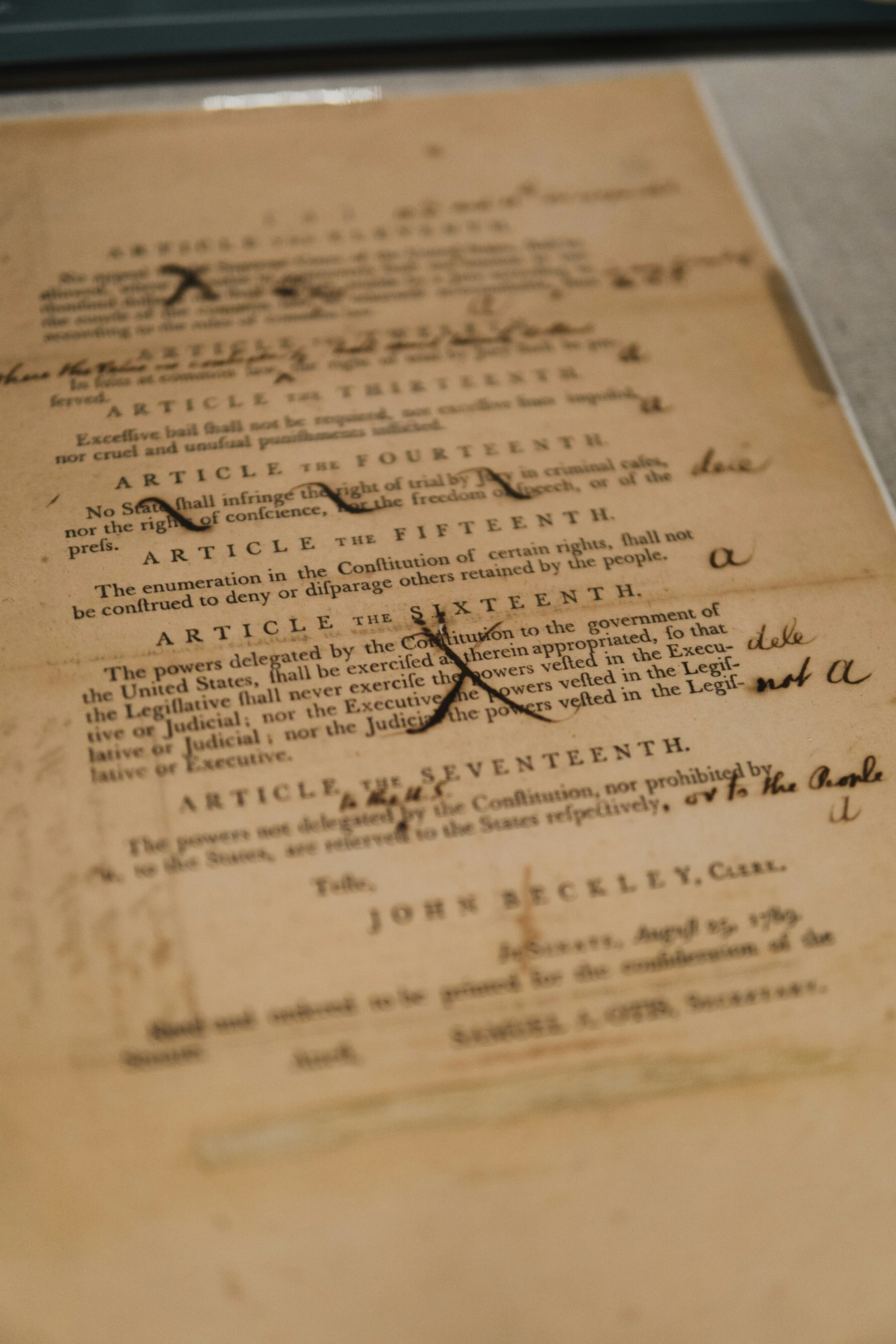
Photo by Anthony Roberts on Unsplash
To the Current Administration — a Rant
Written in May 2026, this second piece turns toward the theological audacity of those who invoke God while practicing cruelty. It is a prophetic interrogation — not of faith, but of the weaponization of faith. It asks: which Bible are you holding? Which God? Consider pairing it with a sermon on the diversity within scripture itself as a counter to authoritarian certainty.
Prophetic Reading, by Rev. Allyson Sawtell
You do your works of injustice and exclusion
You erase identities and histories
You drive species to the brink of extinction
All in the name of God.
God??
The one who created heaven and earth
Light and dark,
Seas and dry land
All manner of creatures
Balance and diversity?
That God?
Or yourselves?
You hold up your Bible to justify your power and prejudice.
Never to be questioned.
The Bible?
The one with 2 contradictory Creation stories,
The one where the same king is both honored and smeared in completely different tellings?
The one with 4 different Gospel stories about Jesus?
That Bible?
What do you do with that —
its questioning of authority,
its difference and diversity,
its contradictions?
Can you hold the holy Both/And?
Can you hold the uncertainty?
Does that undermine your power?
So you create your own stories by your own force of will.
And become the sole arbiter of their truth.
For Reflection — Sermon & Small Group
The second rant contains a profoundly useful theological observation: scripture itself is diverse, contradictory, and multi-voiced. The two creation accounts in Genesis, the four distinct Gospel portraits, the complicated legacy of King David — the Bible does not speak with one uniform voice, and never has. Authoritarian readings that flatten that complexity are not faithful readings; they are power plays dressed in religious language.
In a worship series, this might anchor a Sunday on The Bible as Conversation, Not Verdict — or on the spiritual practice of holding uncertainty, which the current moment demands of us all.